10 Indie Game Studios Flying Under the Radar That Are Absolutely Cooking Right Now
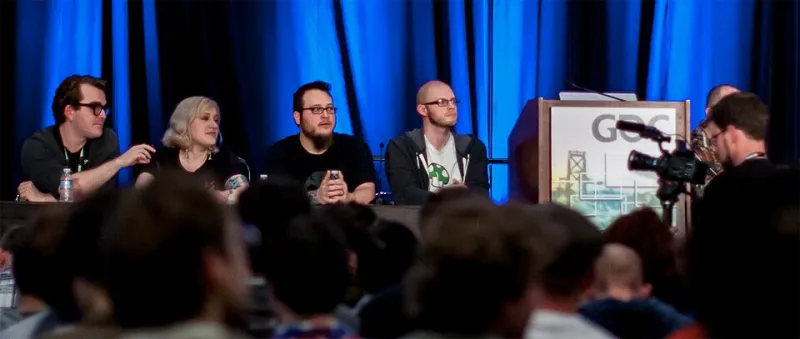
Photo: Fuad Kamal from USA Cropped by czar, CC BY-SA 2.0, via Wikimedia Commons
Let's be honest. The last time a massive AAA release genuinely surprised you — not wowed you with a trailer, but actually surprised you with the game itself — do you remember what it was? Take a second. It's harder than it should be.
Meanwhile, somewhere in a cramped apartment in Seattle, or a converted garage in Chicago, or a small studio above a coffee shop in Raleigh, a team of five people is finishing a game that will end up on someone's all-time favorites list. They don't have a marketing budget. They might not even have a publisher. But they have something the big studios traded away a long time ago: the freedom to be weird.
This is the part of gaming that NicheVault lives for. The underground pass to what's actually good. Here are ten indie studios that are doing work worth paying attention to.
1. Lasso Games (Austin, TX)
Lasso started as a two-person team making narrative puzzle games with a distinctly Southwestern American feel — think desert highways, unreliable narrators, and decisions that actually stick. Their debut title developed a devoted cult following almost entirely through word of mouth on niche gaming forums. What sets Lasso apart is their commitment to environmental storytelling. You piece together what happened not through cutscenes, but through the world itself. It's patient, confident game design that most publishers would have "fixed" into something worse.
2. Hollow Axis (Portland, OR)
Hollow Axis makes games that feel like they were designed by people who grew up reading too much science fiction and not enough gaming press coverage — and that's a compliment. Their titles blend real-time strategy elements with deeply personal narrative arcs in ways that shouldn't work but absolutely do. They've been outspoken about rejecting outside funding that came with creative strings attached, and their games reflect that stubbornness in the best possible way.
3. Moth & Signal (Brooklyn, NY)
If you've spent any time in gaming subreddits over the past couple of years, you've probably seen someone mention Moth & Signal's work in a thread about games that "made you feel something." They specialize in short-form experiences — most of their titles clock in under three hours — but the density of ideas per minute is staggering. They've essentially become the indie short film studio of gaming, and their growing Patreon base suggests players are willing to pay for quality over quantity.
4. Coldframe Interactive (Minneapolis, MN)
Coldframe is doing something genuinely unusual in the survival genre: they're making it slow. Their flagship game strips out the crafting treadmill and inventory tetris that defines most survival titles and replaces it with something closer to environmental observation. Players have described it as "meditative" and "almost boring until it's completely gripping." That tension is intentional. Coldframe has talked publicly about wanting to make games for adults who don't have six hours to grind — a philosophy that's earned them a fiercely loyal following.
5. Ruinfield Studio (Chicago, IL)
Ruinfield makes tactical RPGs with the aesthetic of forgotten 90s PC games and the mechanical depth of something that should cost three times what they charge. Their games are uncompromising in their complexity, but they've built in accessibility options that let newcomers find their footing without dumbing anything down. The result is a community that spans hardcore strategy veterans and total newcomers, all playing the same game at wildly different difficulty levels. That's harder to design than it sounds.
6. Driftwood Labs (Seattle, WA)
Driftwood's whole deal is games about relationships — not romance games, but games about the texture of how people actually interact. Friendships, professional tensions, family dynamics. Stuff that AAA publishers assume won't sell. Driftwood is proving otherwise, slowly but consistently, with each release outperforming the last. Their writing team is small but genuinely exceptional, and gaming journalists who cover indie spaces have been championing their work for a while now.
7. Tandem House (Nashville, TN)
You don't expect Nashville to be a hotbed of experimental game design, which is part of why Tandem House has operated in relative obscurity despite making games that critics consistently describe as ahead of their time. They work in the horror-adjacent space — not jump scares, but dread — and their understanding of pacing rivals anything coming out of major studios. Their games are the kind you finish at midnight and then sit quietly in the dark for a few minutes.
8. Prism Collective (Remote/Distributed)
Prism is fully distributed across eight states, which gives them a perspective on American life that shows up in their work in interesting ways. Their games tend to center on working-class protagonists in contemporary American settings — not as a political statement, but because it's underrepresented territory that turns out to be rich with story. They're one of the most interesting studios nobody outside of indie gaming circles is talking about.
9. Overgrowth Interactive (Denver, CO)
Overgrowth makes platformers. Not retro-nostalgic platformers. Not ironic platformers. Just genuinely excellent, mechanically inventive platformers for people who still think movement and feel are the core of what makes games satisfying. In a genre that gets dismissed as kids' stuff, they're making the case that precision movement design is its own art form. Their speedrunning community is one of the most active and welcoming in the indie space.
10. Vantage Point Games (San Francisco, CA)
Vantage Point is the youngest studio on this list and arguably the most ambitious. They're building a mystery game that uses procedural generation not for levels, but for character motivations — meaning no two playthroughs have quite the same story logic. It's the kind of experimental swing that a publisher with a risk committee would never greenlight. Which is exactly why it's being made by five people in a shared office space, shipping when it's ready.
Why This Matters Beyond Just Good Games
The reason to care about studios like these isn't just that they make good games — though they do. It's that they represent a model of creative production that the mainstream industry has largely abandoned. Small teams, clear vision, no committee. The financial pressure is real and constant, which makes the quality of what comes out the other side even more impressive.
AAA publishers aren't going anywhere. The big franchises will keep getting bigger budgets and bigger marketing campaigns and bigger launch-day server crashes. But if you want to know what gaming is actually capable of — what it looks like when a small group of people have something to say and the freedom to say it — the indie underground is where you look.
Consider this your pass.