Digging Through the Digital Graveyard: How Niche Communities Are Reclaiming Early Internet Aesthetics on Their Own Terms
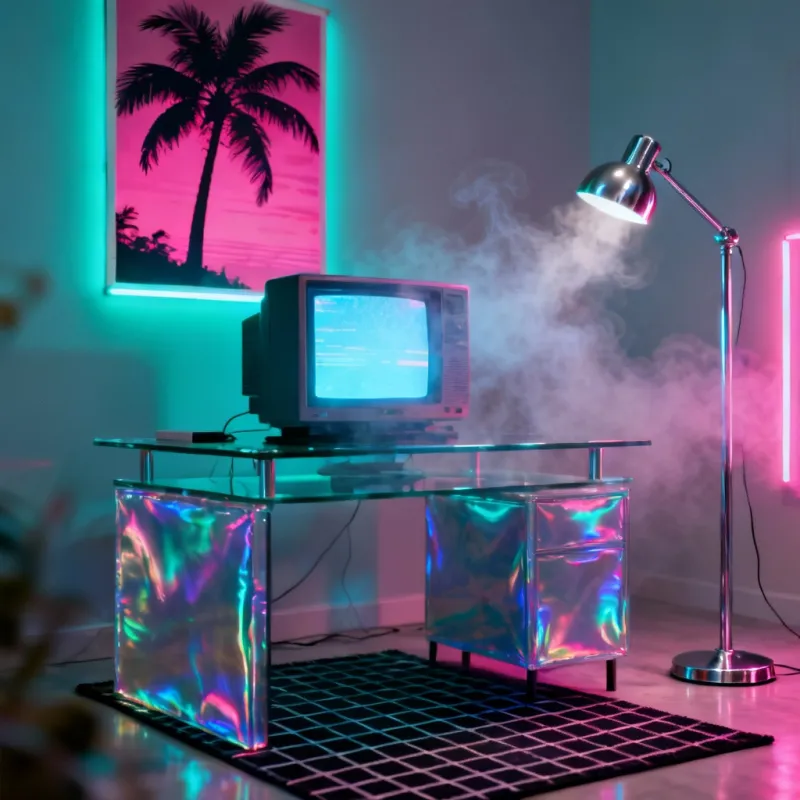
Photo: vaporwave Y2K retro digital aesthetic neon glitch computer nostalgia, via resource.myaiart.io
There's a particular kind of energy that lives inside a well-curated Tumblr archive circa 2024. Pastel gradients bleeding into pixelated mall fonts. Winamp skins. Blingee graphics that feel like they were born in a Hot Topic fever dream. If you've stumbled into one of these corners lately, you already know — something is very much alive in what most people assumed was dead.
We're talking about the resurrection of early internet and Y2K aesthetics, and it's happening in ways that are way more intentional than your average nostalgia wave. This isn't just Gen Z slapping a CRT filter on a TikTok. There are actual communities — collectors, digital artists, archivists — doing serious cultural preservation work on platforms most people forgot existed.
The Vaporwave Foundation That Started It All
To understand where we are now, you have to go back to vaporwave — that surreal, slowed-down musical and visual genre that emerged around 2010-2012 on SoundCloud and Tumblr. Vaporwave wasn't just lo-fi beats. It was an aesthetic argument: that the hollow optimism of late-capitalist consumer culture could be made beautiful and strange through distortion and repetition.
The visual language — Roman busts next to Windows 95 interfaces, Miami Vice sunsets glitching over Japanese kanji — became its own thing entirely. And while vaporwave as a music genre peaked and faded from mainstream awareness, its visual DNA never really died. It just went underground, where it quietly merged with Y2K revival energy and started mutating into something new.
Right now, that mutation is accelerating.
Where the Real Collectors Live
If you want to find where this stuff is actually happening, you need to look past the obvious. TikTok's mainstream Y2K content is basically just Von Dutch hats and low-rise jeans at this point. That's the surface-level stuff.
The real action is happening in private Discord servers dedicated to archiving early 2000s web design, in Tumblr communities that never left and are now experiencing a genuine renaissance, and in subreddits where people are trading original Geocities assets and building new sites with them from scratch.
There are communities specifically dedicated to preserving Flash animation — not just watching it nostalgically, but studying its construction, remixing it, and teaching each other how to replicate that particular jittery energy using modern tools. The Internet Archive's Flash preservation efforts have become almost sacred texts in these spaces.
And then there's the hardware angle. A surprisingly active collector community in the US is hunting down original devices — early iPods, Motorola Razrs, even original Palm Pilots — not to use them practically, but to photograph them, document them, and integrate them into visual art projects that feel genuinely rooted in that era rather than performed.
Why Authenticity Matters When Your Whole Thing Is About Obsolescence
Here's the interesting tension at the center of all this: these aesthetics are fundamentally about things being old, forgotten, and left behind. So what does it mean to be "authentic" when you're celebrating inauthenticity? When the whole point is that something is a relic?
The communities doing this well seem to understand that authenticity isn't about using original hardware or having been there in 2003. It's about understanding the emotional logic of the aesthetic — what it was actually saying at the time, what anxieties it was processing, what kind of digital utopia or dystopia it was imagining.
Vaporwave, at its core, was melancholy about corporate promises that never delivered. Y2K design was giddy and anxious at the same time — the world was ending and also everything was chrome and amazing. When artists in these communities work with these visual languages now, the best ones are in genuine conversation with those original emotional registers, not just copying the surface.
That's what separates the underground community doing this from the inevitable Target collaboration that'll hit shelves in about eighteen months.
The Gen Alpha Clock Is Ticking
Anyone who's watched an aesthetic get mainstreamed knows the pattern. It starts in tiny pockets, migrates to early-adopter platforms, gets discovered by a mid-tier influencer, hits a major TikTok moment, and then lands in a Shein collection. The whole cycle can happen in under two years now.
The communities preserving these digital aesthetics are acutely aware of this. There's real anxiety in some of these spaces about "their" thing getting flattened into a costume. And honestly? That anxiety is part of what's driving the urgency of the archival and creative work happening right now.
Some creators are deliberately making their work harder to find — releasing pieces only in private Discords, watermarking aggressively, keeping distribution intentionally limited. Others are going the opposite direction: leaning into documentation and education, trying to make sure that when the mainstream wave hits, there's a record of what this actually was before it got processed.
What's Coming Next
If you want to track where this goes, watch a few specific signals. The webcore and frutiger aero aesthetics — that early 2000s era of glossy, optimistic, nature-meets-technology design that defined Windows Vista and early iPhone marketing — are getting serious attention right now in niche design communities. It hasn't broken through yet, but it's close.
Also keep an eye on the intersection of these aesthetics with music. Artists on Bandcamp and SoundCloud are building sounds that match the visual languages — not vaporwave exactly, but adjacent genres that carry the same emotional DNA. When visual and audio aesthetics merge in a community, things tend to accelerate fast.
For now, though, the underground is still the underground. And if you know where to look — the right Tumblr tags, the right Discord invites, the right corners of the Internet Archive — you can still find these things in their most interesting, unprocessed form.
That's kind of the whole deal with NicheVault, isn't it? Getting there before it's everywhere. These communities figured that out years ago.