Someone Has to Save It: The Obsessive Archivists Racing to Preserve the Internet Before It's Gone
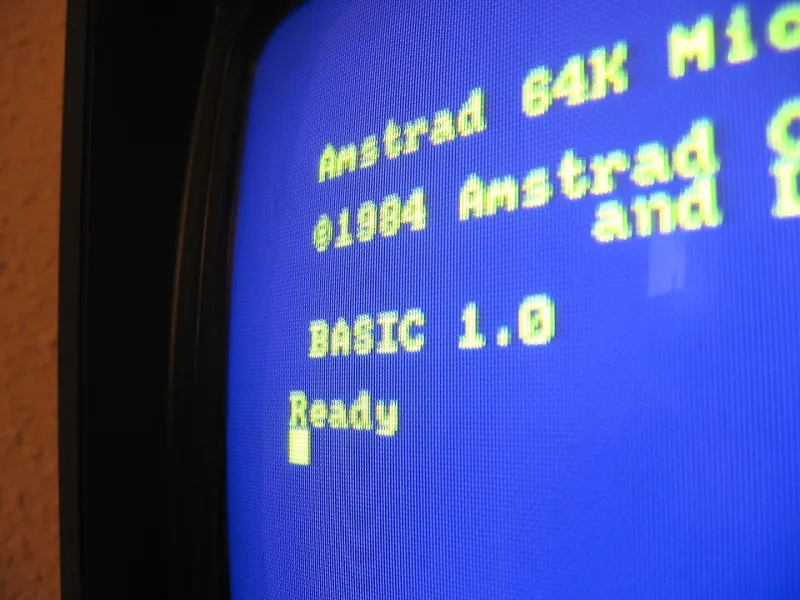
Photo: Manuel Bartual from Madrid, España, CC BY-SA 2.0, via Wikimedia Commons
Somewhere on a server farm in San Francisco, the Wayback Machine is quietly doing what it's always done — crawling the web, snapshotting pages, building a record of the internet as it existed before somebody decided to delete it. The Internet Archive has been at this since 1996, and it remains the most well-known effort to keep digital history from vanishing entirely.
But the Internet Archive can't get everything. It can't get the private Discord servers where fanfiction communities spent years building lore. It can't get the forum threads that got nuked when a gaming company decided to migrate to a new support platform and "archive" the old one by pointing a 404 at it. It can't get the hand-maintained wikis that died when the one person running them stopped paying the hosting bill.
That's where a surprisingly large, surprisingly passionate network of volunteer archivists comes in.
The Scale of What's Actually Being Lost
It's hard to convey how much digital history has already disappeared. GeoCities — once the third most-visited site on the internet, home to millions of personal homepages — was deleted by Yahoo in 2009. A group called the Archive Team scrambled to save what they could, but the majority of it is gone. The original Something Awful forums, which spawned half of internet culture as we know it, have been slowly restricting and deleting old content for years. Early YouTube videos, MySpace pages, Flash game libraries, Usenet archives — huge swaths of the early web exist now only in fragments.
The reasons vary. Sometimes it's a business decision: maintaining old content costs money and generates no revenue. Sometimes it's legal — DMCA takedowns, privacy requests, or licensing issues make preservation legally risky. Sometimes it's just entropy. A domain expires, a server goes offline, and nobody noticed until it was gone.
What makes this particularly painful is that the content being lost isn't trivial. Online communities have produced genuine cultural artifacts: collaborative fiction projects, grassroots journalism, technical documentation, subcultural histories that exist nowhere in print. When they disappear, there's no physical archive to fall back on. They're just gone.
The People Doing the Work
The archival community is a loose coalition of obsessives, and the word "obsessive" is meant affectionately. These are people who have spent hundreds of unpaid hours writing scrapers, negotiating with forum admins, and coordinating mass download efforts before a platform goes dark.
The Archive Team — founded by Jason Scott, who also works at the Internet Archive — operates something called the Warrior project, which lets volunteers donate their computing power and bandwidth to help archive sites that are about to go offline. When a platform announces it's shutting down, the Archive Team mobilizes. They've saved content from Geocities, Vine, Google+, Photobucket, and dozens of smaller sites.
Then there are the more specialized efforts. The Video Game History Foundation is a nonprofit specifically dedicated to preserving video game history — not just the games themselves, but the documentation, the development histories, the fan communities that formed around them. They've been vocal about the fact that roughly 87% of classic video games are currently out of print and inaccessible, a statistic that lands differently when you think about what it would mean if 87% of classic films had simply ceased to exist.
Fan communities have their own preservation efforts, often running quietly in the background of larger fandoms. There are dedicated wikis that have been maintained for 15+ years by volunteers who refuse to let their corner of fandom history die. Some of these have migrated platforms multiple times, carrying their content through forum software changes, wiki platform shutdowns, and hosting crises.
There's also a more informal layer of preservation happening constantly — the person who screenshots important Twitter threads before they get deleted, the Reddit user who exports subreddit data before a community goes private, the Discord moderator who keeps a text archive of server history. It's decentralized, inconsistent, and often invisible, but it's happening.
Why Big Tech Doesn't Do This
The obvious question is why the platforms themselves don't maintain better archives of their own content. The answer is depressingly straightforward: there's no business model for it.
When Twitter's original API allowed researchers and archivists to pull historical tweet data, that access was cut off almost immediately after Musk's acquisition — not because the data was sensitive, but because charging for API access was a revenue opportunity. The Library of Congress famously attempted to archive all public tweets from 2006 to 2017, then quietly shelved the project because the data was too massive and too complex to make usable.
Facebook has deleted enormous amounts of early content through various platform transitions. Tumblr's adult content purge in 2018 wiped out years of creative work that had no backup. When Google shut down Google+ in 2019, users had a few months' notice to export what they could — but most didn't know it was coming until too late.
The pattern is consistent: platforms treat old content as a liability rather than a legacy. Storage costs money. Old content creates moderation headaches. Maintaining historical archives doesn't drive engagement metrics. So it gets deleted.
The Tools and the Tactics
For people who want to contribute to preservation efforts, the infrastructure is actually more accessible than it looks.
The Archive Team Warrior is the easiest entry point — it's a virtual machine you run on your computer that participates in coordinated archival sprints. When a site is flagged as at-risk, Warriors automatically start downloading and uploading content to the Archive Team's servers.
For more targeted preservation, tools like HTTrack, Wget, and ArchiveBox let individuals create local mirrors of websites they care about. The subreddit r/DataHoarder is a sprawling community dedicated to exactly this kind of personal archival work, with detailed guides on everything from scraping forums to archiving YouTube channels before they disappear.
For fan communities specifically, the Organization for Transformative Works runs the Archive of Our Own — a nonprofit fanfiction archive that has explicitly built its infrastructure around long-term preservation rather than growth metrics. It's one of the few large-scale digital archives that was designed from the start to outlast its creators.
What's Actually at Stake
Here's the part that doesn't get talked about enough: the internet was supposed to democratize cultural memory. Before the web, what got preserved was largely what institutions decided was worth preserving — and institutions have historically been pretty bad at deciding that subcultural, marginal, or non-mainstream things matter.
The early internet created a record of how ordinary people lived, communicated, and built communities in a way that had never existed before. Fan communities, hobbyist forums, personal blogs, niche message boards — all of it represented a kind of cultural documentation that historians will eventually want access to.
The archivists working to save it aren't just nostalgic. They're doing something genuinely important, and they're doing it with volunteer labor and donated server space because nobody else will.
If you've got a community, a forum, a wiki, or a corner of the internet that matters to you — back it up. Don't assume the platform will be there next year. Don't assume someone else is handling it.
They're probably not.