RSS Is the New Rebellion: Inside the Indie Podcast Networks Leaving Spotify in the Dust
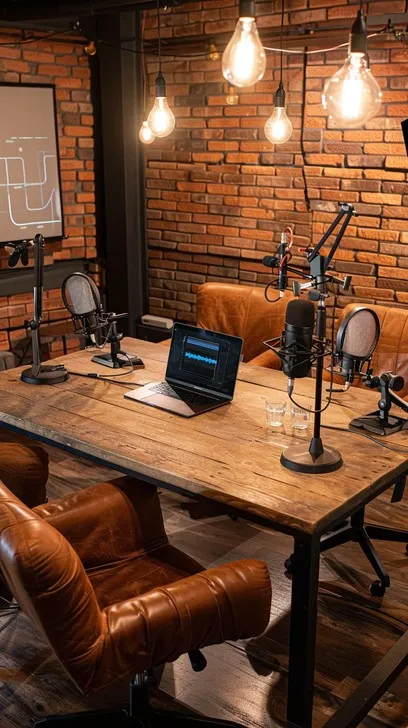
Photo: vintage microphone podcast recording studio indie, via images.stockcake.com
Let's be honest: the last time Spotify's podcast recommendation engine surprised you, it probably wasn't in a good way. Another true crime miniseries. Another comedian doing a rambling interview show. Another celebrity-adjacent talking head explaining how they found their purpose at a wellness retreat in Sedona.
Meanwhile, somewhere outside the walled garden, a podcaster is recording a deeply obsessive 90-minute breakdown of the economic history of the American mall food court. And people are loving it.
That's the thing about the indie podcast world right now — it's thriving precisely because it doesn't care about your discovery queue.
The Spotify Problem Nobody Wants to Say Out Loud
Spotify spent somewhere north of a billion dollars trying to become the dominant podcast platform. And technically, it worked — they have the numbers. But what those numbers don't capture is how many of their listeners are passively consuming content they didn't really choose, served up by an algorithm optimized for time-on-app rather than actual satisfaction.
The result is a homogenized middle. Shows that are broad enough to not alienate anyone. Topics calibrated to hit the widest possible demographic slice. Production values that say "we have a budget" but not "we have something to say."
For a certain kind of listener — the kind who actually hunts for content rather than waiting for it to appear — that model is genuinely exhausting.
What Indie Networks Are Actually Building
Scatter across the RSS landscape and you'll find networks that operate on an entirely different logic. Places like Fathom Podcast Network, Multitude Productions, and Maximum Fun have been doing this for years: clustering a handful of shows around a shared sensibility rather than a shared demographic target.
Maximum Fun, for example, has built a listener-supported model around shows that cover everything from film criticism to comedy to tabletop gaming — not because those things test well together in focus groups, but because the people who make and listen to those shows genuinely overlap in their cultural tastes. The network runs an annual fundraising drive where listeners pay what they want. No ads required. The community self-sustains.
Then there are the one-person or two-person operations that don't belong to any network at all, distributed purely through RSS and discovered almost entirely by word of mouth. Shows like Maintenance Phase — which dissects the junk science behind diet culture and wellness myths — built a massive, engaged audience without ever being algorithmically promoted. Same with If Books Could Kill, which tears apart airport self-help bestsellers with a kind of gleeful academic rigor that shouldn't work but absolutely does.
These shows spread because listeners recommend them. Not because Spotify put them in a "You Might Also Like" row.
The Hyper-Specific Is the New Mainstream (For the Right People)
Here's what's genuinely wild about the current indie podcast moment: the more specific a show gets, the more devoted its audience tends to be.
There are active, paying listener communities built around shows about obscure Italian genre cinema, the microeconomics of minor league baseball, the history of American diner architecture, and the evolution of video game UI design. None of these shows will ever crack a top-ten chart. All of them have listeners who would describe them as among their favorite pieces of media, full stop.
That's the vault unlock that mainstream platforms keep missing. Specificity isn't a liability — it's a loyalty engine. When a show is made for you, you don't just listen. You subscribe to the Patreon, you join the Discord, you evangelize to your friends.
Where to Actually Find These Shows
This is the part that requires a little more effort than opening an app, but that's kind of the point.
Podchaser has become one of the better directories for finding shows outside the algorithmic mainstream — you can search by topic with enough granularity to surface genuinely obscure stuff. Listen Notes functions almost like a search engine for podcasts and is particularly good for finding shows that haven't been promoted anywhere.
For network-level discovery, it's worth just browsing the rosters of indie networks directly. Radiotopia (from PRX) remains one of the gold standards for audio storytelling that doesn't fit anywhere else. Headgum leans comedy and pop culture but with a sensibility that feels genuinely human. Exactly Right, founded by the My Favorite Murder hosts, has expanded into a network with a surprisingly diverse range of shows.
And honestly? Reddit and niche Discord servers are still among the best discovery mechanisms for podcasts that exist. The r/podcasts subreddit regularly surfaces gems that never appear in any platform's recommendation engine.
The Funding Model That Makes It Sustainable
What's made this ecosystem more durable than it might have been five years ago is the maturation of direct listener support. Patreon normalized the idea that audiences will pay for content they love, and podcast-specific platforms like Supporting Cast have made it easier for shows to offer premium feeds, bonus episodes, and ad-free listening without building their own subscription infrastructure.
This matters because it decouples show quality from download metrics. A show with 15,000 deeply committed listeners who each pay $7 a month is running a more sustainable operation than a show with 500,000 passive listeners generating thin CPM ad revenue. The math changed, and indie creators figured it out.
The Listener Who Goes Looking
There's a certain kind of person the mainstream podcast economy isn't really built for: the one who wants to go deep, who gets frustrated by content designed to be half-listened to while doing something else, who would rather spend three hours with one obsessive voice than skim ten shows in the same time.
That person is the core audience for everything happening outside Spotify's orbit. And based on the growth of listener-supported indie shows over the last three years, there are a lot more of them than the algorithm ever accounted for.
The RSS feed never died. It just went underground and got more interesting.